
Price matters, but compare wet grip, intended use, mileage, noise and replacement risk—not the brand tier alone. A premium tyre may offer stronger performance or longevity, but performance varies by model and size.
Budget vs premium tyres is easier to understand when you separate the immediate decision from the checks behind it. Price matters, but compare wet grip, intended use, mileage, noise and replacement risk—not the brand tier alone.
The large size numbers are only part of the decision. Construction, load capability, speed rating, seasonal design, vehicle approval and the way the car is used all influence whether a tyre is a sound match.
Short answer: Price matters, but compare wet grip, intended use, mileage, noise and replacement risk—not the brand tier alone.
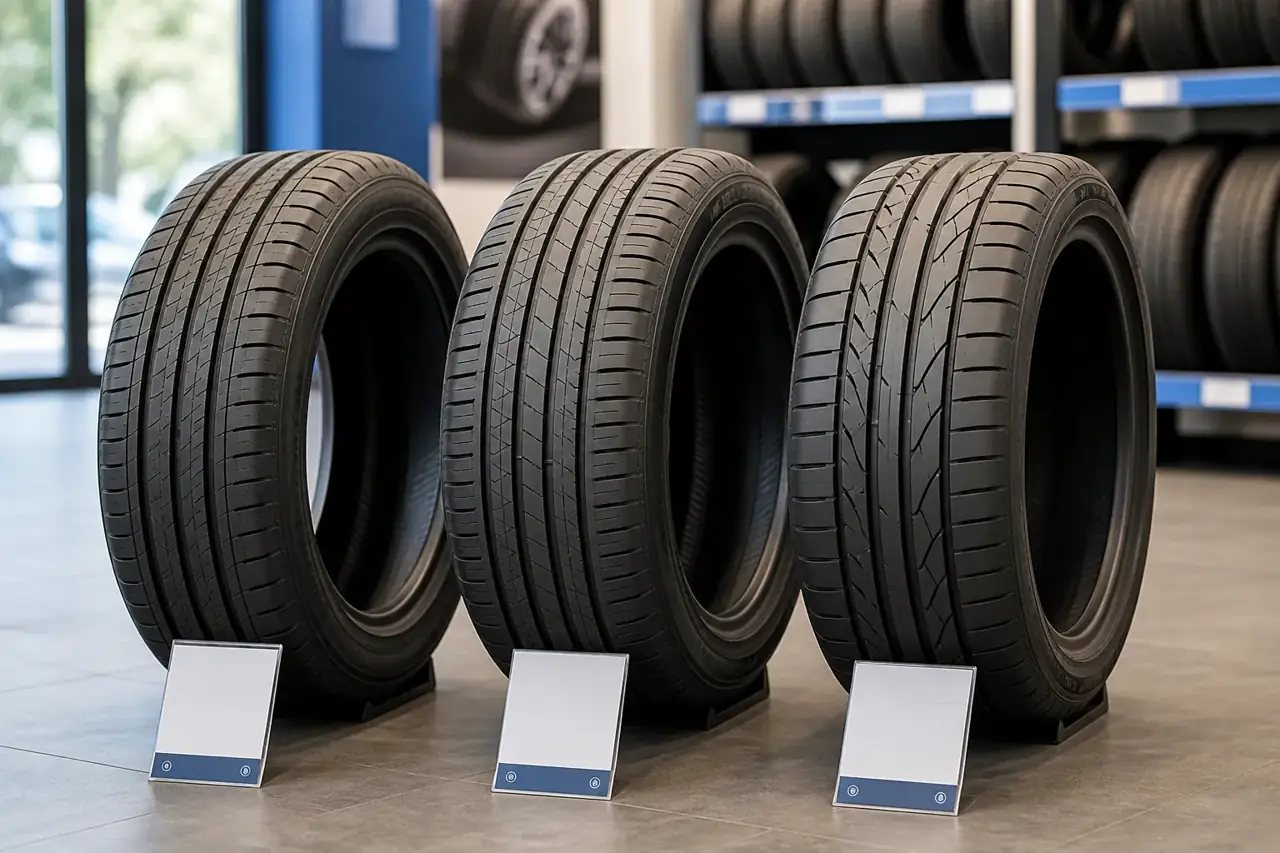
What you need to know
The important detail
A premium tyre may offer stronger performance or longevity, but performance varies by model and size.
Check this point against both the fitted tyre and the vehicle handbook before building a shortlist.
What it means in practice
A quality mid-range tyre can suit moderate use better than an unsuitable premium design.
Keep comparisons like-for-like; a cheaper product with a different specification is not a direct alternative.
What drivers often miss
Check comparable labels and independent tests for the exact product, not only the manufacturer.
Ask the retailer to confirm suitability in writing when the marking or vehicle requirement is unclear.
Choose around the vehicle, annual mileage and worst regular conditions rather than marketing language.
A sensible check, step by step
-
Copy the entire specification from the tyre and vehicle guidance.
-
Compare products in the same size, load, speed and seasonal category.
-
Confirm fitting, delivery and disposal costs before paying.
Common mistakes to avoid
- Relying on a single quick glance instead of checking the whole tyre and its inner edge.
- Using a generic number or internet tip when the vehicle handbook gives a specific requirement.
- Assuming a tyre is safe because no dashboard warning is showing.
What to do next
Check the complete tyre specification and condition in good light. Write down anything that differs between the four corners of the car. If the tyre may be unsafe, avoid unnecessary driving and arrange an inspection by a competent tyre professional.
Quick questions
Can I rely on a visual check?
No. A visual check is useful for obvious damage, but pressure, tread depth and internal condition may need the correct gauge or a professional inspection.
Should I check only before an MOT?
No. Tyres change between tests. Regular checks and a check before long journeys are a better routine.
What if I am still unsure?
Treat uncertainty about damage, fitment or pressure as a reason to ask a competent tyre professional before continuing a journey.
Find local tyre help Search tyre prices →